
Here you will find some history around some of the locations we host ghost hunting events at across the UK. Stanford House & The People’s Hall in Nottingham is exclusive to Faded Footsteps for Ghost Hunting Events we also offer private investigation hire in these locations too.
In Chesterfield we also host exclusive ghost hunts at Ye Royal Oak and are able to offer private investigations through Faded Footsteps exclusively on Sunday/Monday alongside the pubs closing times.
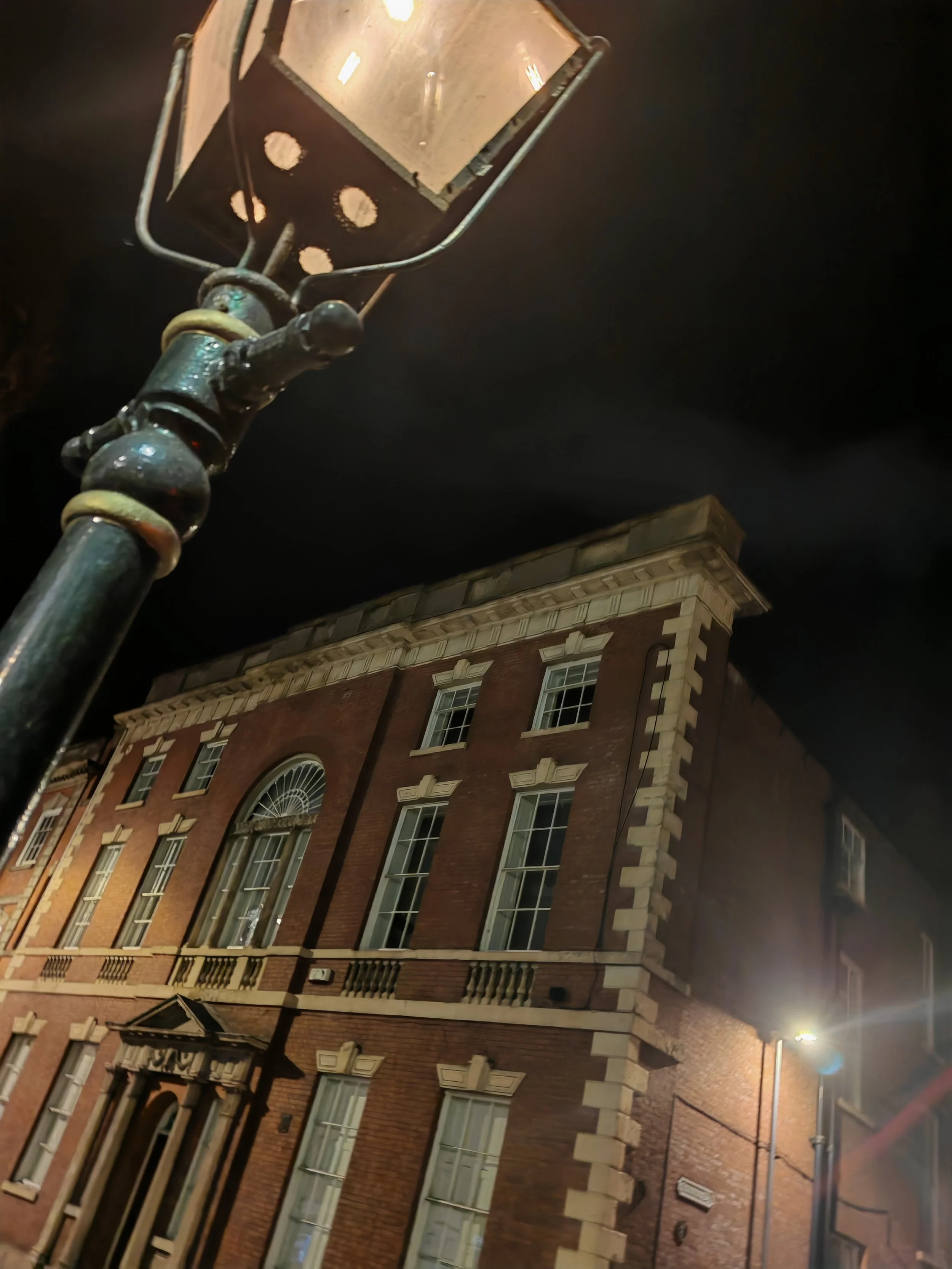
STANFORD HOUSE, NOTTINGHAM
The first mention found of a house on this site was in 1684, after this the property was known as Lord Howe's house, a magnificent mansion, built about 1755. It was erected as the town house of the family of Howe of Langar, whose most distinguished member was Admiral Lord Howe (who celebrated a victory over the French off Brest in 1794) and William Howe who rose to commander in chief during the American war of independence. William Stanford remodelled in 1775. Its elaborate portal, decorated with the classic ox-skull and swags of flowers is a decorative feature of the classical period of Ancient Greece and Rome, when the garlands decorated the sacrifices which were hung up as trophies upon altars, and here revived during the neo-classical movement of the Georgian Period. In 1789 Mr. Stanford, who was a great Royalist, celebrated King George III's recovery from his mental illness by having the house gaily illuminated, and distributed half-a-hogshead of beer to the neighbouring people with which to drink the King's health.
GHOST HUNTS - PRIVATE INVESTIGATIONS - GHOST TOURS
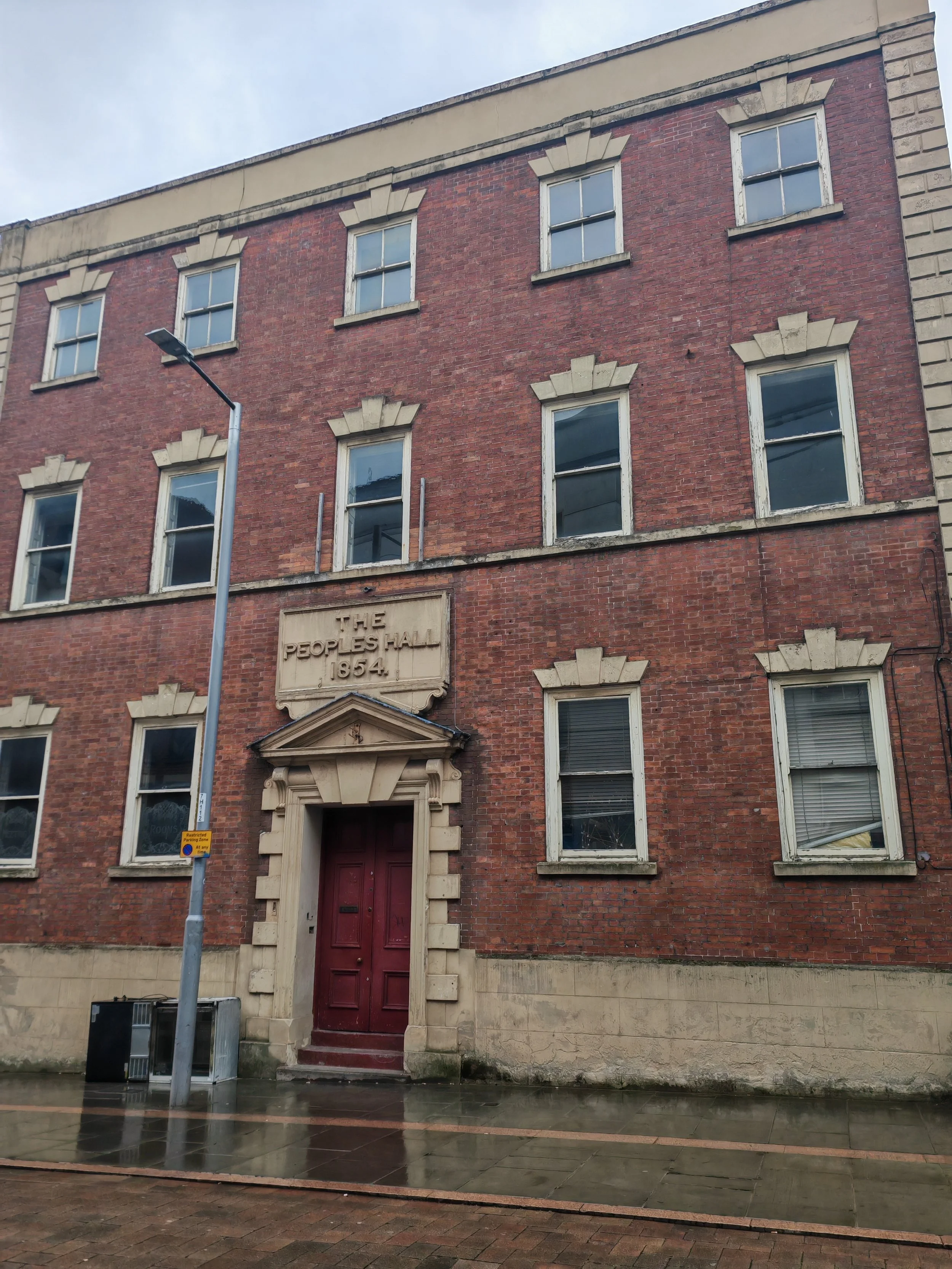
THE PEOPLE’S HALL, NOTTINGHAM
The People’s Hall was originally known as Morley House and was built in 1750 for Ann Morley. The Morley’s were potters who had made the famous Nottingham brown stoneware since the 1680s and had been making tiles for many years before that. Their Pottery nearby in Carter Gate and at The Beck Barns. They also made glass which is where Glasshouse Street gets its name. Anne’s husband Charles, who died at the young age of 39 was described as “an opulent potter in this town.” Building such a large, iconic house was surely the widowed Anne’s way of making a statement. She was an independent, strong and successful businesswoman, something most unusual for a woman at that period.
n 1843, The Nottingham School of Design, first opened here to educate workers in the lace and textile industry and, in 1854, lace merchant George Gill established the People’s Hall Institute - a ‘working-man’s hall’. It was at this point when the building was almost doubled in size and re-fronted.
During the 20th century the building was used for a variety of different purposes, including as a rehearsal hall for The Cameo Players, a local amateur dramatic group; a meeting place for the Antediluvian Order of the Buffalo; and, since the Second World War, a venue for sporting competitions including snooker and billiards.
GHOST HUNTS - PRIVATE INVESTIGATIONS - GHOST TOURS
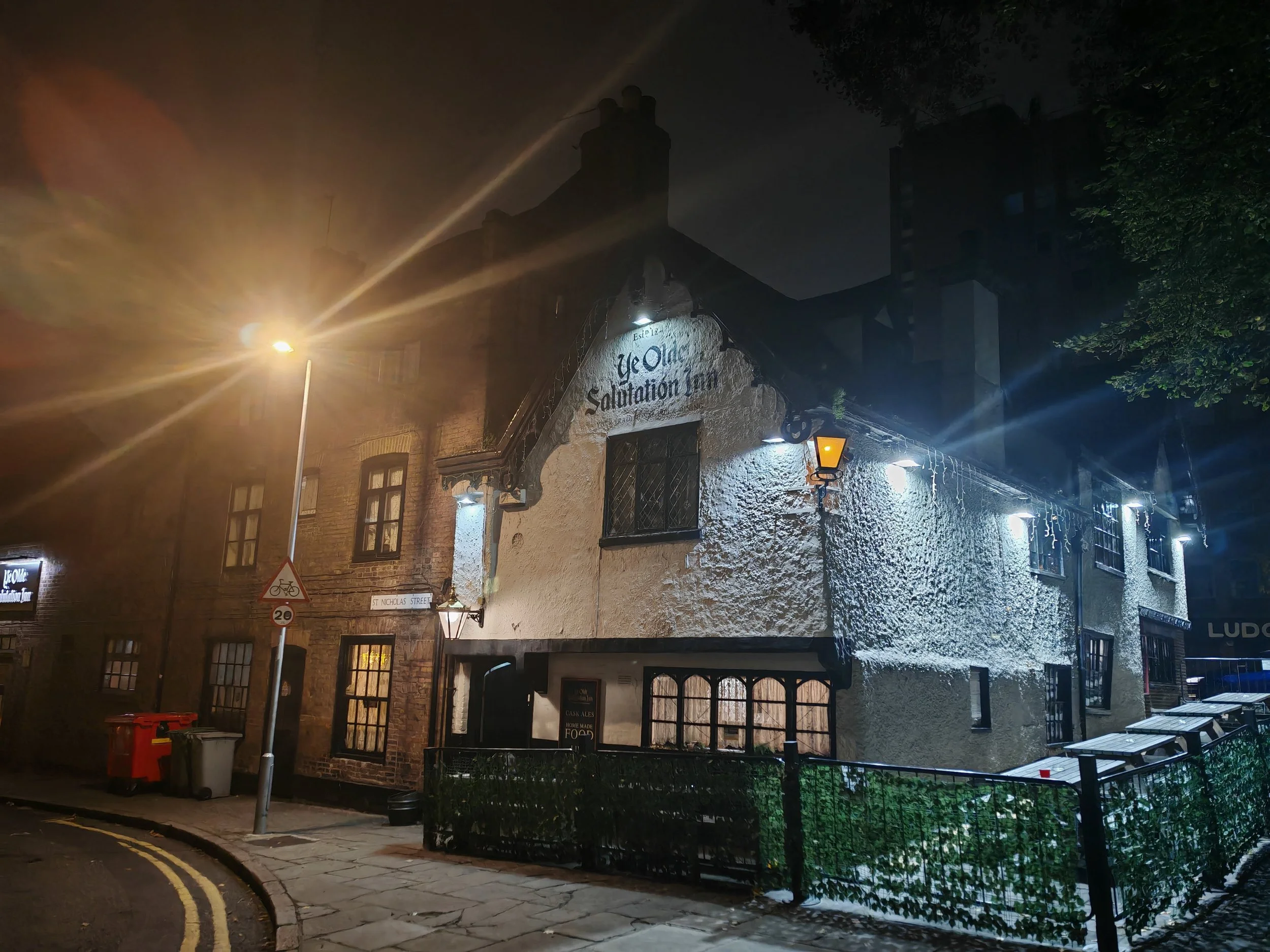
YE OLDE SALUTATION INN, NOTTINGHAM
Nicknamed The Sal, Ye Olde Salutation Inn is a grade II listed public house in Nottingham with parts dating from around 1240. It lays claim to being the oldest pub in the city. The inn also has a claim to being the most haunted pub in the country, one landlord having asserted the presence of 89 resident apparitions.
A 13th-century alehouse known as "The Archangel Gabriel Salutes the Virgin Mary" is believed to have been constructed on this site in 1240. Crusading knights are said to have stopped for food at the alehouse on their way to the Holy Land. Borough records indicate the presence on the site of a hostel for travellers and journeymen in 1414 and a private dwelling belonging to a John Alastre in 1440.
Local legend claims that leading Parliamentarians, including Oliver Cromwell signed King Charles I’s death warrant in the inn.
The inn had acquired a sinister reputation by the late 17th century and was a hangout for highwaymen, including Dick Turpin. The Inn was the site of tragedy in 1820 when oatmeal was contaminated with arsenic killing landlord John Green.
GHOST HUNTS - GHOST TOURS
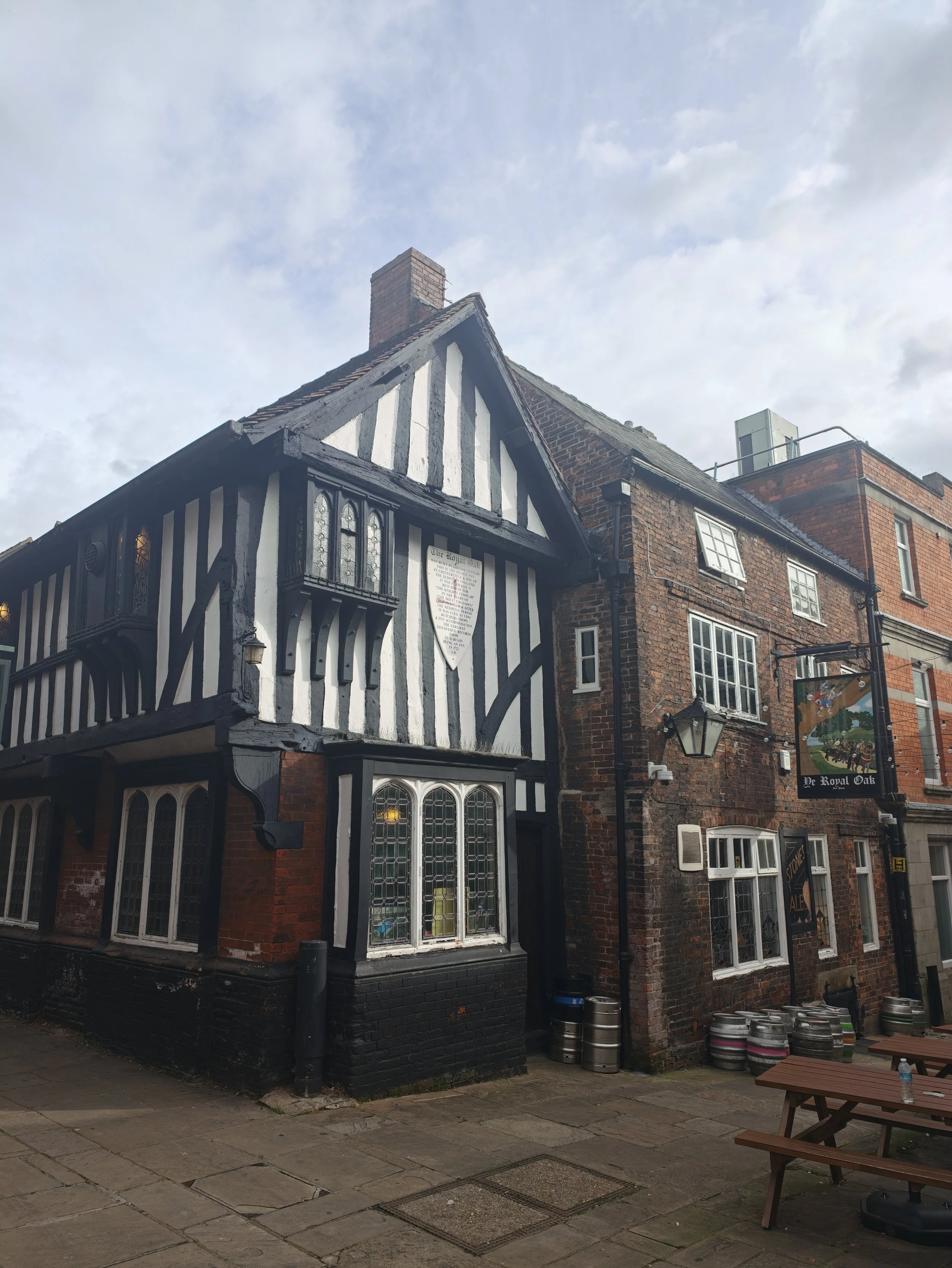
YE ROYAL OAK, CHESTERFIELD
The Royal Oak Inn, located in the Shambles of Chesterfield, is a Grade II* listed public house with a rich history dating back to the 16th century. It is believed to have served as a rest-house for the Knights Templar during the Holy Crusades of the 12th century. The inn's timber frame structure and close studding are characteristic of its architectural style, which dates back to the 16th century. The Royal Oak Inn's restoration in 1898 and its designation as a Grade II* listed building in 1971 highlight its significance in Chesterfield's heritage. The pub's history is intertwined with the town's medieval past, making it a notable landmark in Chesterfield's history.
The inn's dark history is marked by the murder of George Collis in 1845, 7th December 1845 John Platts murdered George Collis in his butchers shop in the Shambles (now part of the Royal Oak), but his accomplices were never brought to trial. One died before the trial and the third was never identified. Before his execution Platts made two confessions, both contradictory to the evidence, and so the the name of the third man remains a mystery.
GHOST HUNTS - PRIVATE INVESTIGATIONS - GHOST TOURS